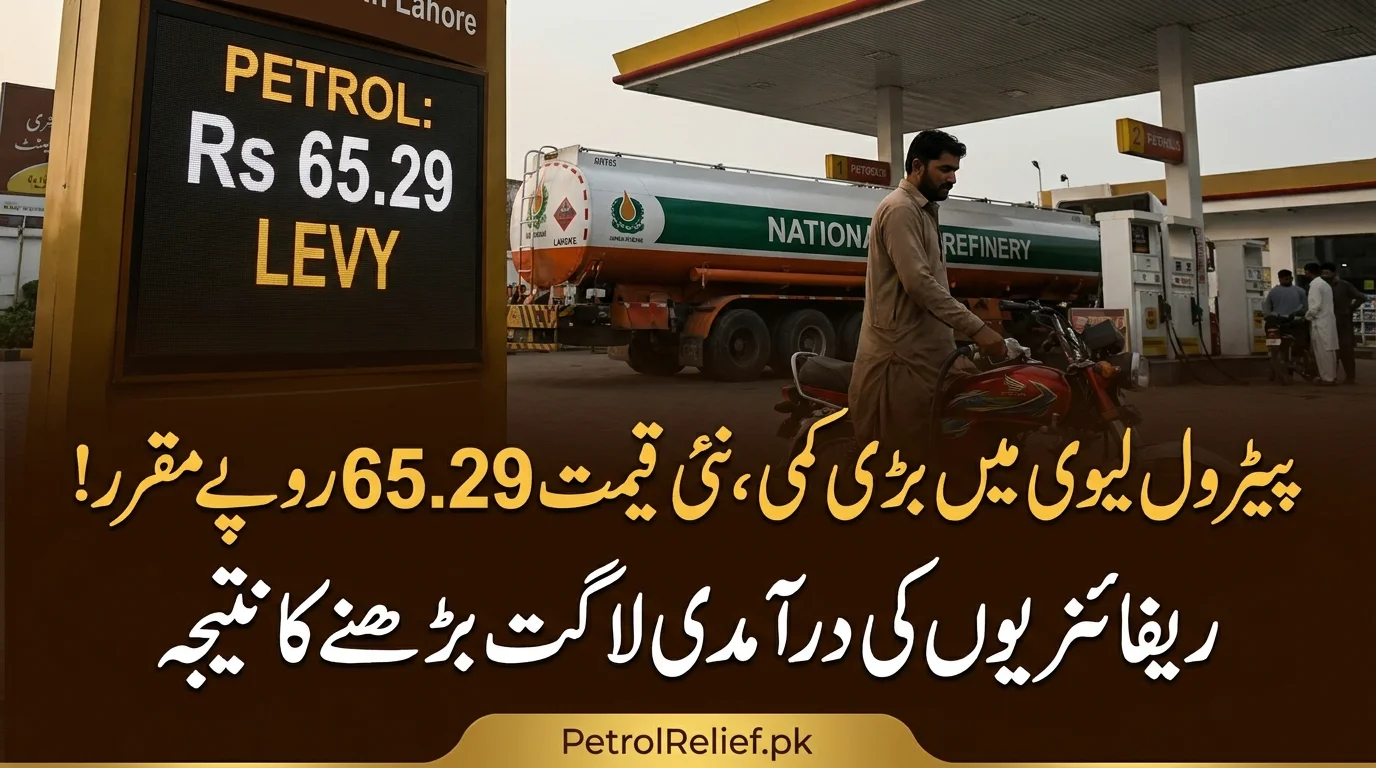
Petrol Levy. The federal government has adjusted the petroleum levy structure to keep petrol prices unchanged despite an increase in import costs. Under the new arrangement effective October 31, 2026, local oil refineries will bear part of the additional cost instead of passing the full increase on to consumers.
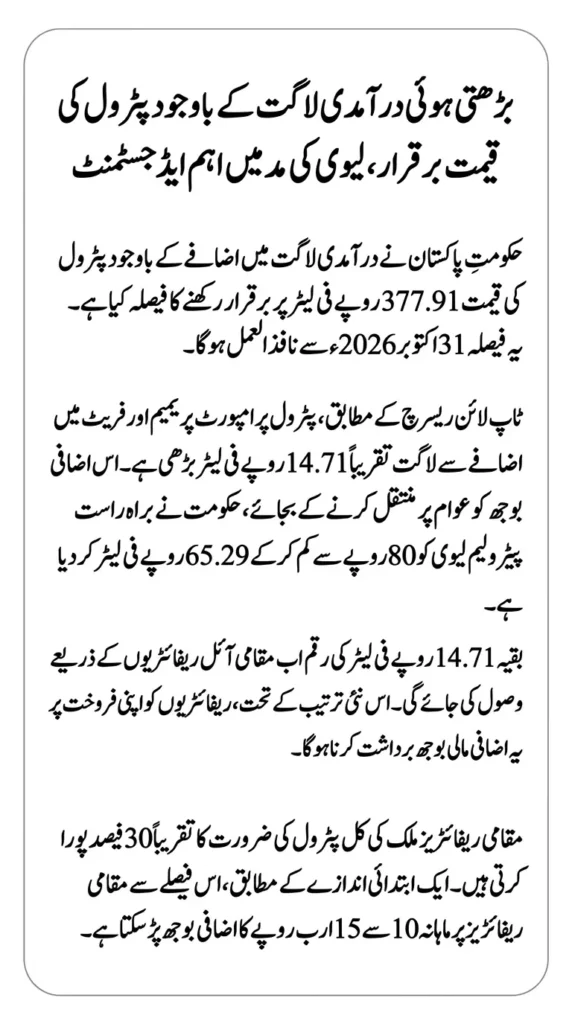
According to a research report by Topline Research, the import premium on petrol, including freight, increased from $19.88 to $25.52 per barrel. This increase added approximately Rs14.71 per litre to petrol costs.
To manage the additional expense, the government adjusted the petroleum levy collected directly from oil marketing companies. The direct levy has been reduced from Rs80 to Rs65.29 per litre, while the remaining Rs14.71 will be collected through local refineries.
Petrol Price Remains Rs377.91 Per Litre
Despite the higher import costs, the government has maintained the petrol price at Rs377.91 per litre from October 31.
The latest adjustment means consumers will not face an immediate petrol price increase due to the additional import premium. However, the overall petroleum levy remains Rs80 per litre when the refinery contribution is included.
This is an adjustment in how the levy is collected rather than a complete reduction in the total levy.
Local Refineries May Face Rs10-15 Billion Monthly Burden
Pakistan’s local refineries supply approximately 30% of the country’s total petrol requirements. Under the revised arrangement, these refineries will have to absorb the additional financial burden through their petrol sales to oil marketing companies.
Topline Research has estimated that the arrangement could create a monthly financial burden of around Rs10 billion to Rs15 billion for local refineries.
The brokerage described this figure as a preliminary estimate. The actual financial impact may become clearer after further details and confirmation from refinery companies.
What Does This Decision Mean for Petrol Consumers?
For ordinary consumers, the immediate impact is that petrol prices have remained unchanged despite higher import-related costs.
The government has used a different collection mechanism to manage the additional expense rather than increasing the retail petrol rate. However, the financial impact on local refineries could become an important issue for the petroleum sector.
Consumers should also understand that the adjustment does not mean petrol has become cheaper. The retail price remains Rs377.91 per litre, while the government has changed how part of the petroleum levy is collected.
Latest Update: Petrol remains at Rs377.91 per litre from October 31, 2026. The direct petroleum levy is Rs65.29 per litre, with another Rs14.71 being recovered through local refineries under the revised arrangement.
